Starting With an Old Canvas
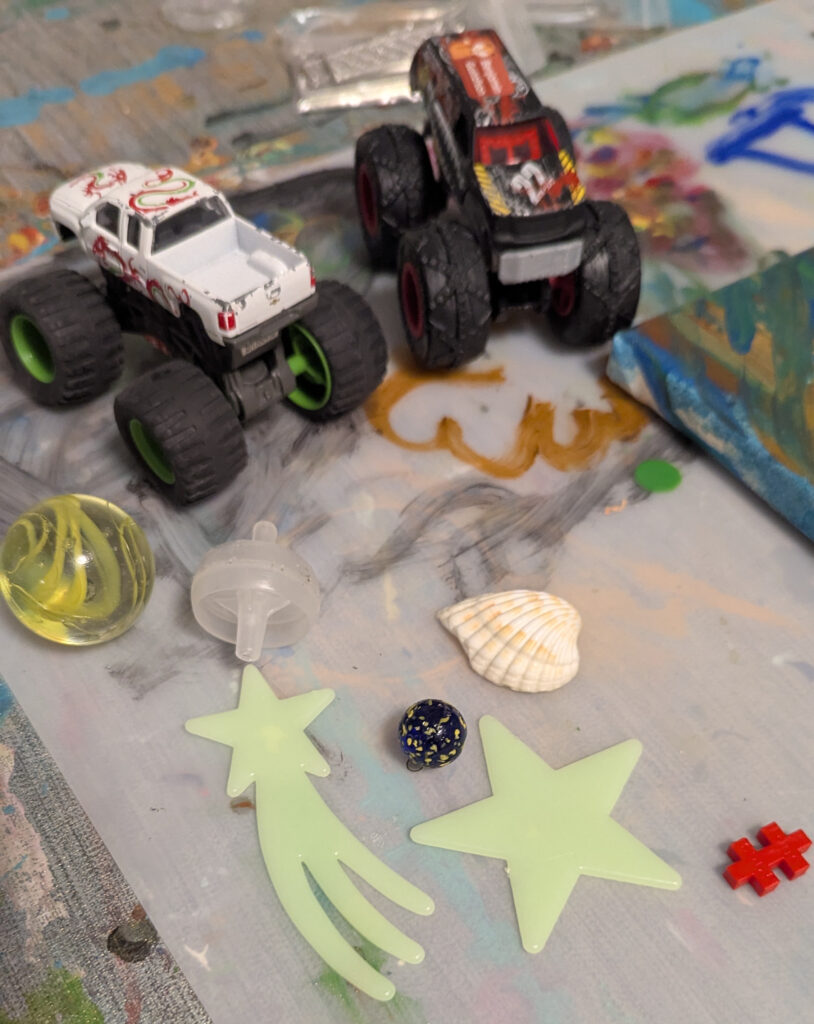
I had an old test canvas sitting on my table, two “lemon moon” circles I didn’t want to lose, and a pile of random objects that probably weren’t meant for painting — monster trucks, kitchen gadgets, marbles, and glow-in-the-dark stars.
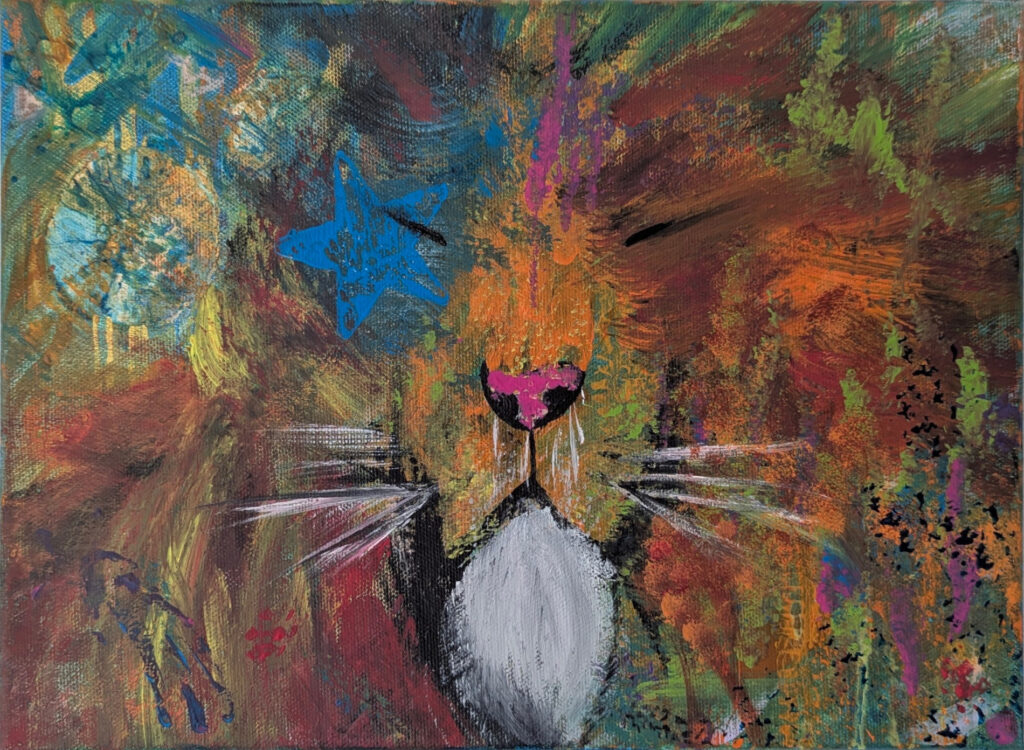
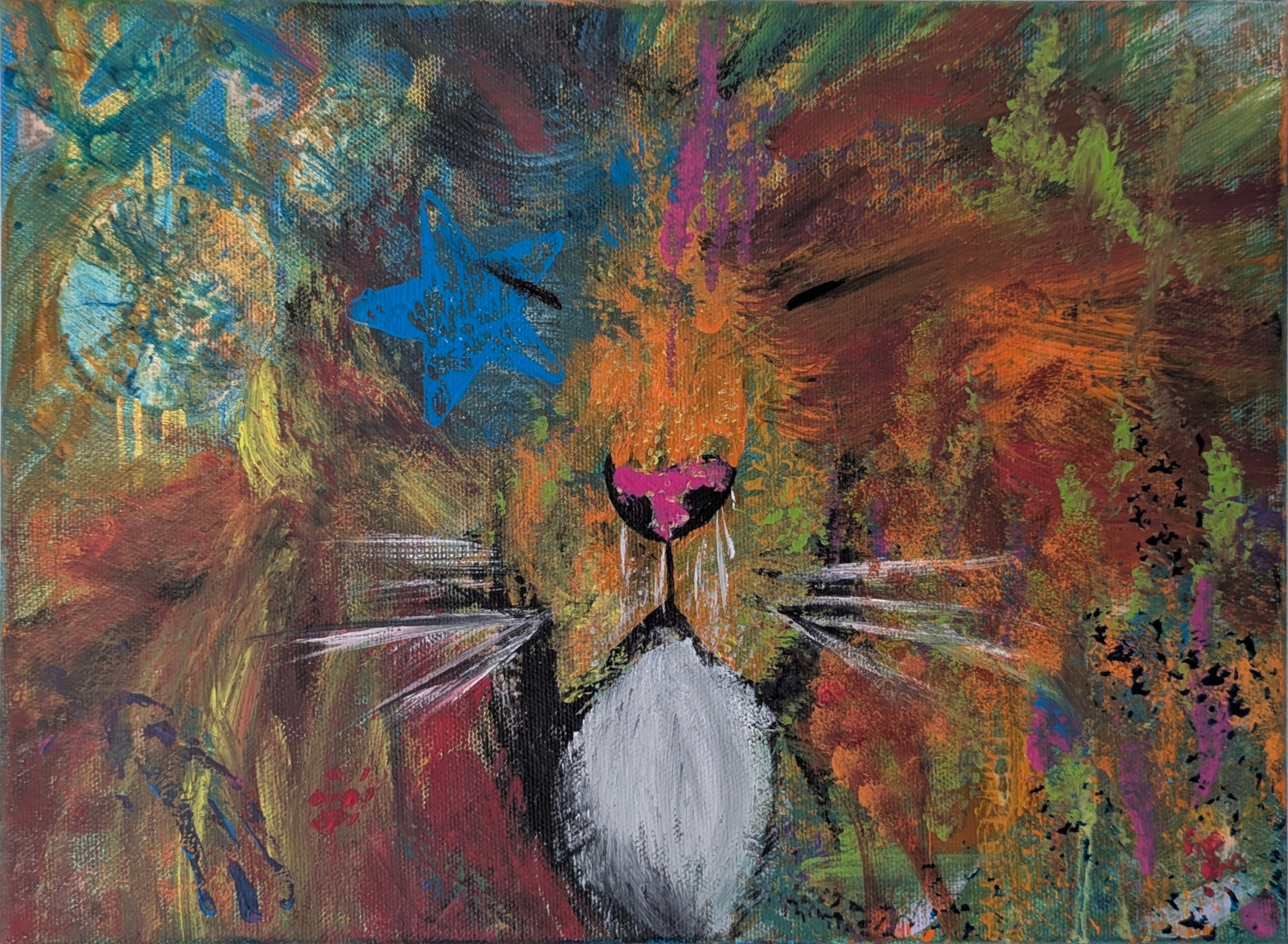
What followed was part experiment, part play, and slowly… a lion began to appear.
Protecting the Lemon Moons
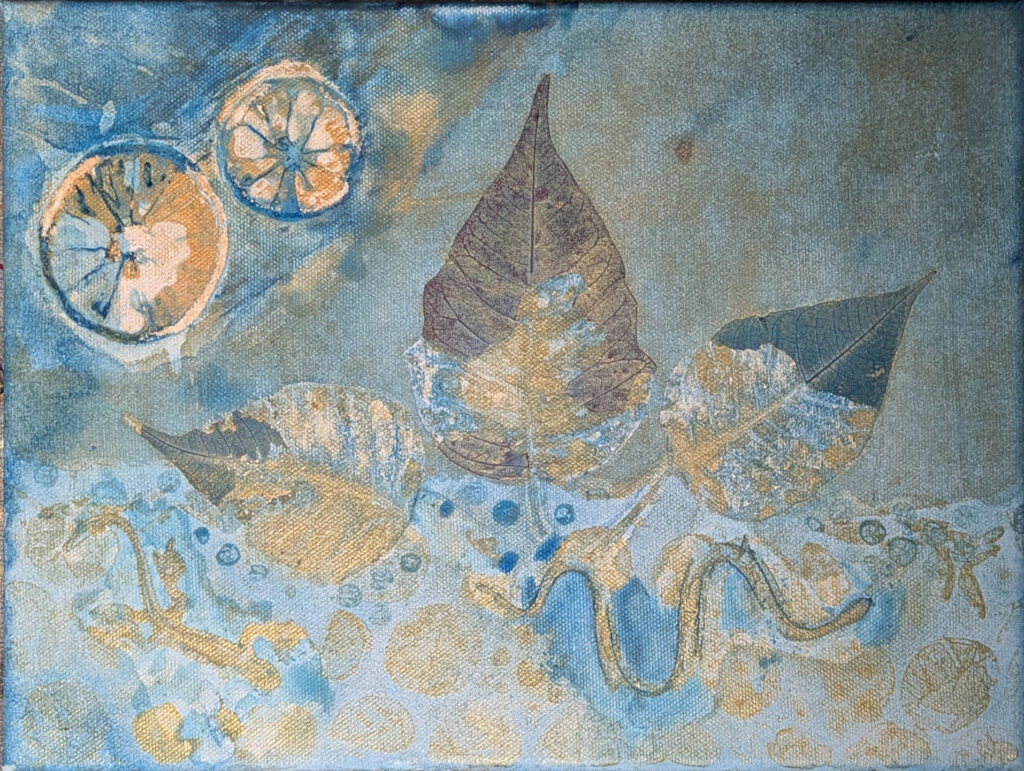
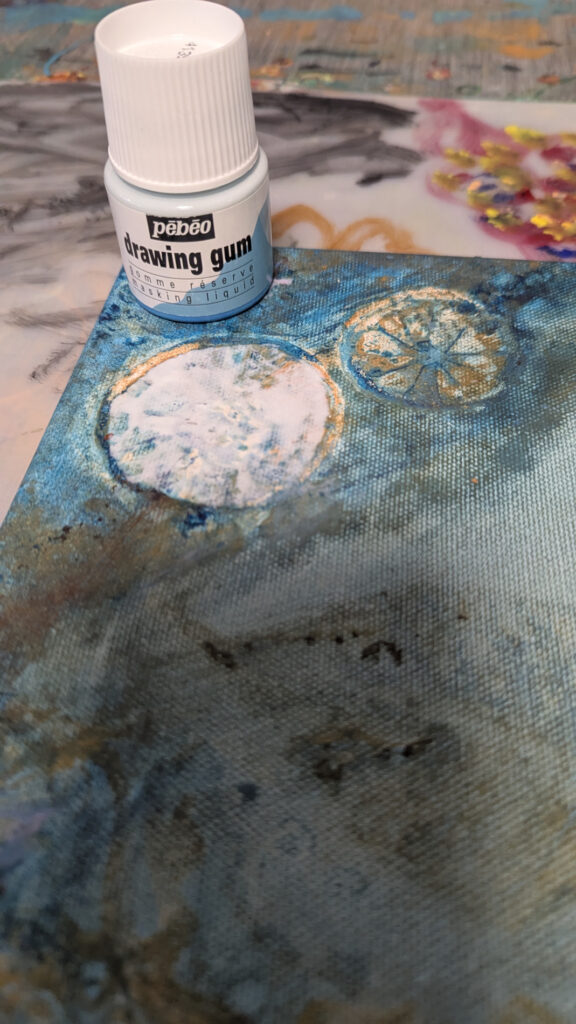
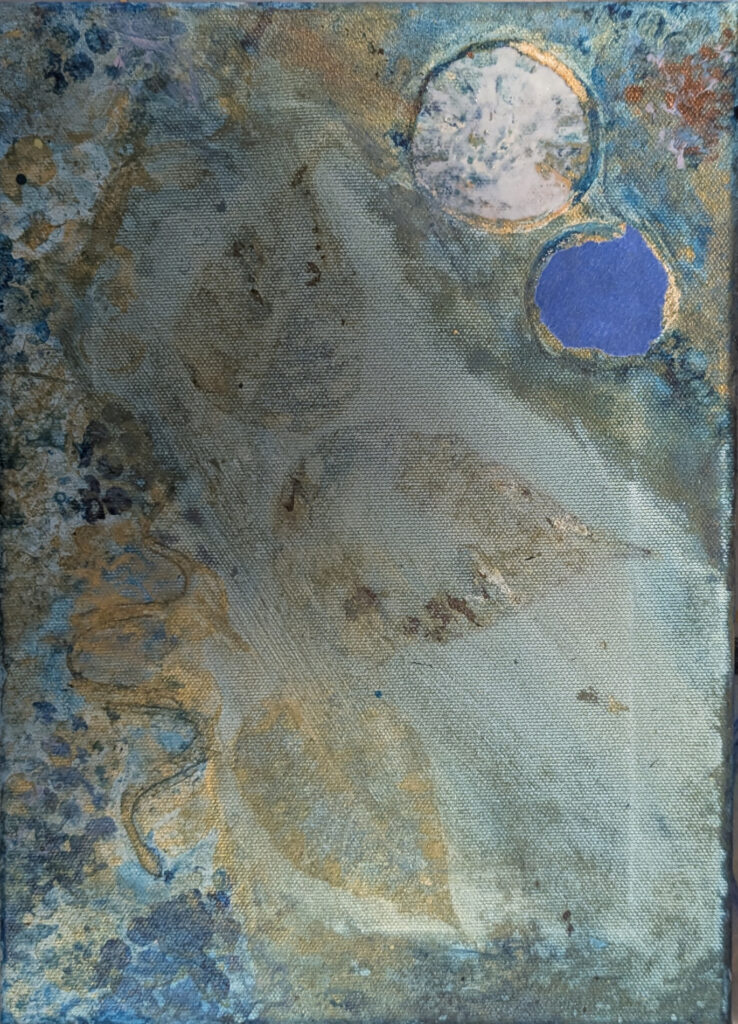
Two circles made with lemon slices from an earlier experiment were still on the canvas, and I wanted to preserve them. To do this, I decided to compare Pebeo’s Drawing Gum versus painter’s tape to see which technique would protect the circles best.
Pouring Rivers of Color
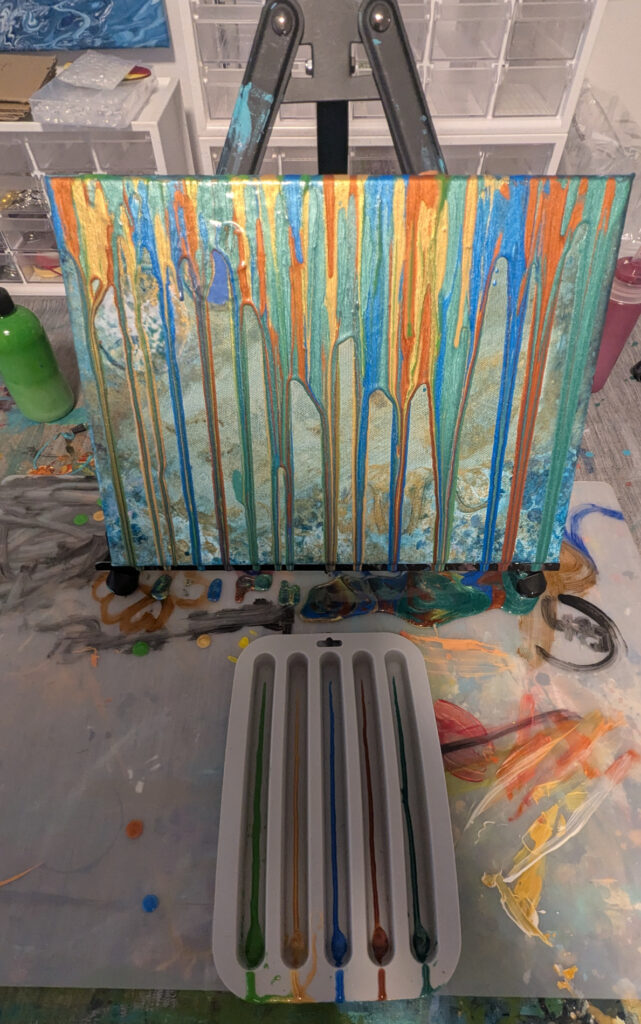
I often wander through the kitchen section of stores looking for unusual tools that might create interesting paint effects.
I found these cool silicone trays that could pour five unique streams of color at once. I filled them with various metallic paints to see how they would flow.
What Worked Best
Both products worked very well, and my lemon moon circles were preserved equally well with each technique.
The drawing gum takes a bit more effort to apply, but if you need to protect irregular shapes, it’s easy to see the advantages of using it.
Painting With Toys
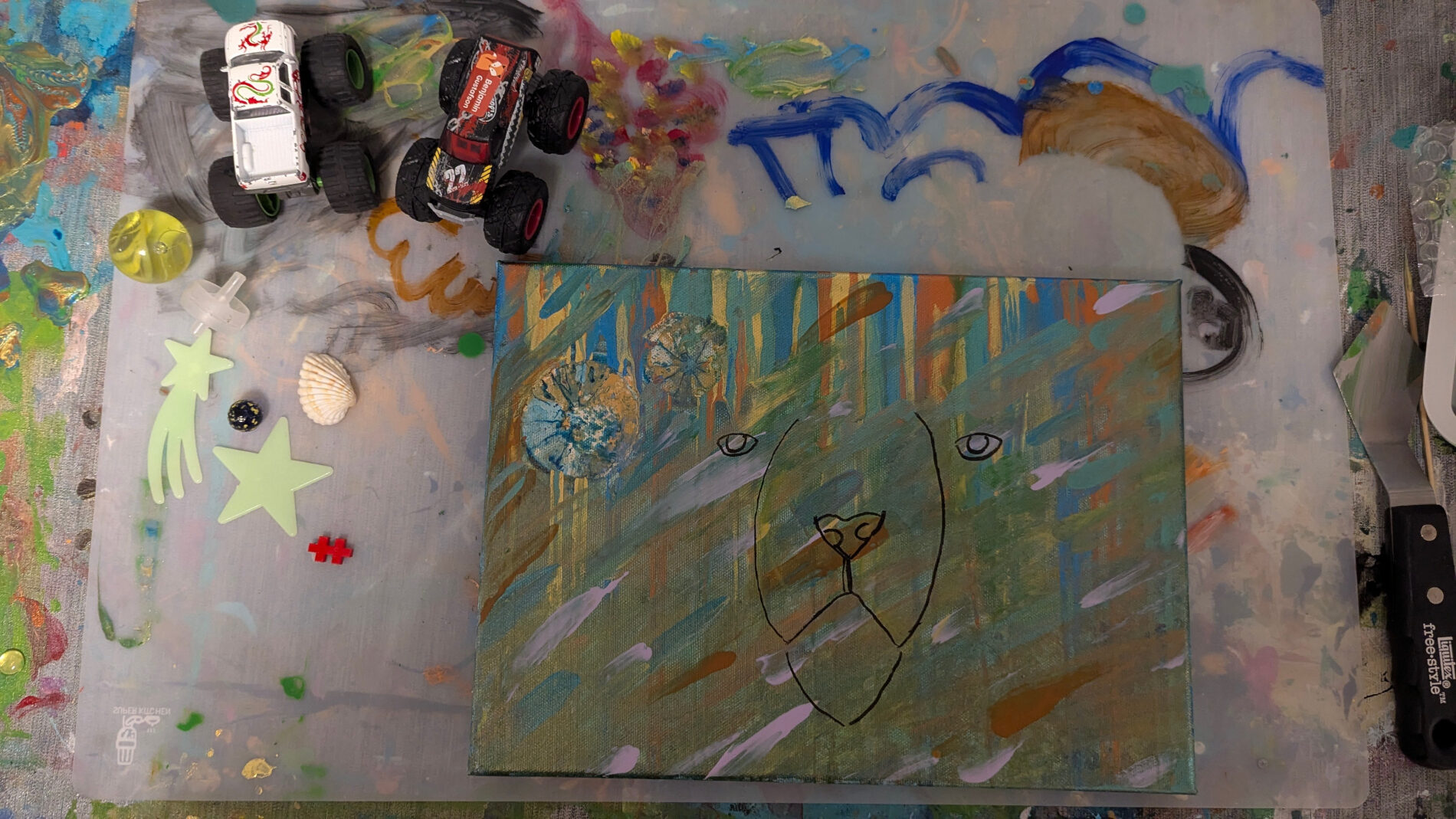
I had seen someone use various kids’ toys — and really anything that felt like a fun tool — to create unique textures in a painting.
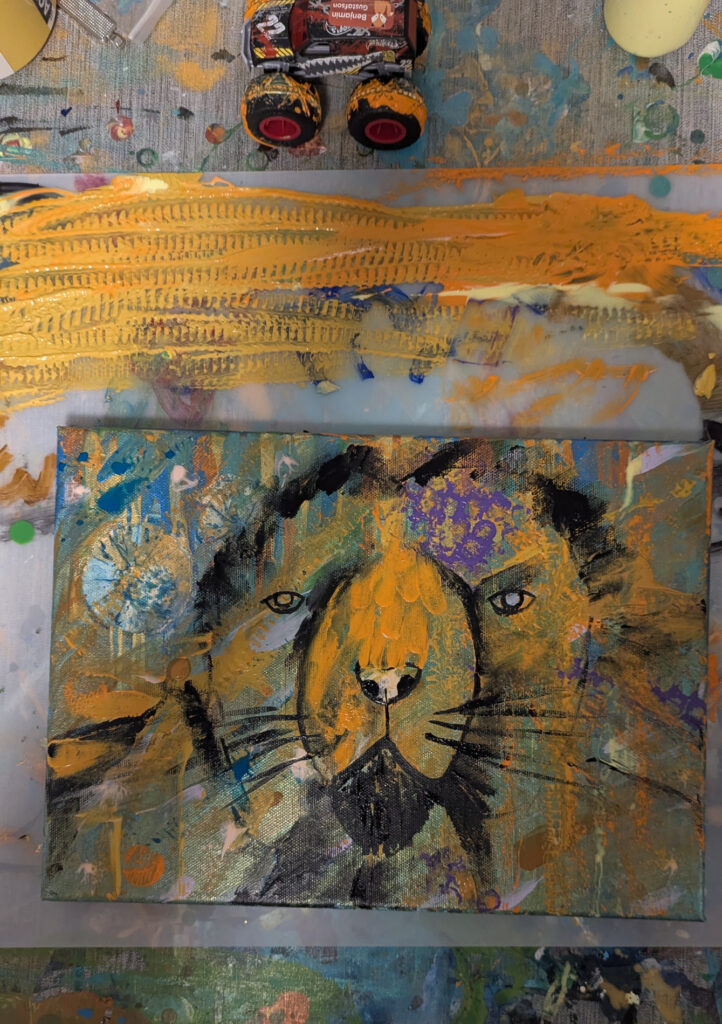
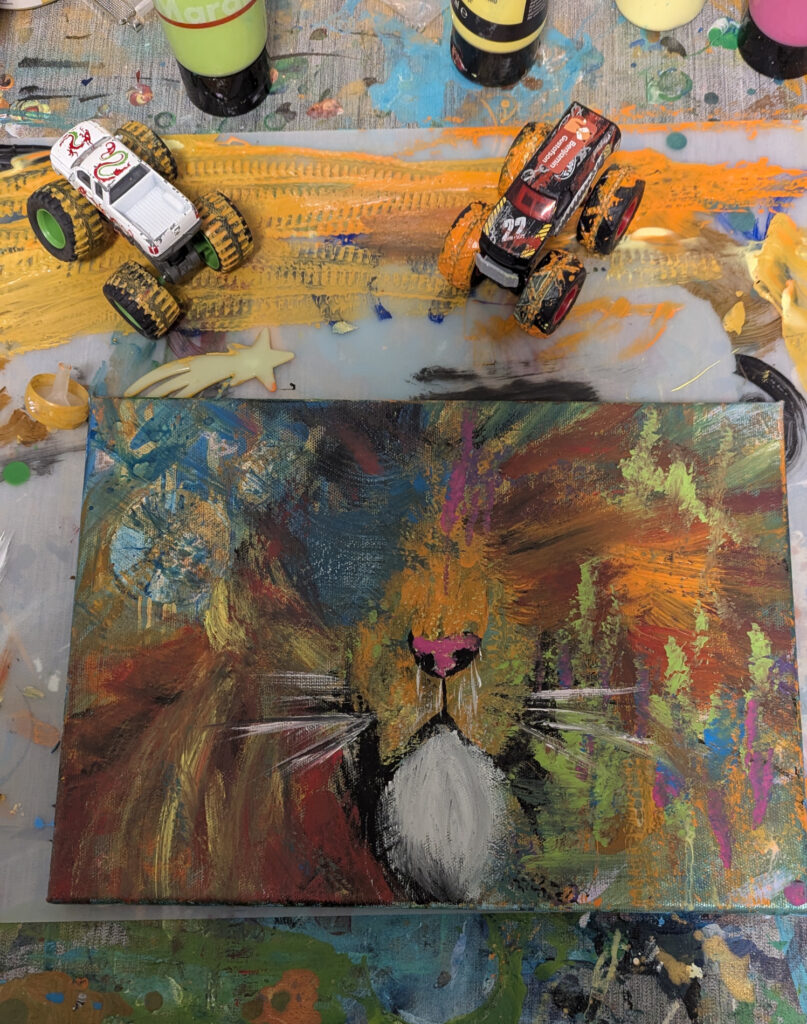
I asked my son Benjamin if I could borrow a few of his monster trucks to leave tire tracks in the paint. He happily agreed and watched as his toys became painting tools.
Soon we had monster-truck tracks, star shapes, marble swirls, and all sorts of unexpected textures covering the canvas.
I knew I wanted a lion somewhere in the piece, but I had no idea yet how it would emerge.
When the Lion Appeared
Some tools worked better than others, but slowly a lion’s face began to emerge.
One of the biggest benefits of this technique is that it helps you get unstuck. You keep adding layers, colors, and texture until something begins to reveal itself.
Conclusion
In the end, a calm lion emerged from the layers of color and texture — its mane wild, eyes closed as if soaking in the sun.
What started as a simple experiment turned into one of my favorite parts of painting: playing without knowing exactly where things will lead.
Along the way I discovered new tools, new techniques, and a few ideas I’m excited to explore again in future pieces.