Day 1
I wanted to experiment with something I saw Nate Bright do on his YouTube channel. It’s a three-day process, and while I’m only on day two, I already feel like there are enough juicy bits to write about. I feel like a broken record when I say this, but once again — the process looked way easier when someone else was doing it.
The overall concept is fairly simple: take a few leaves, place them on a canvas, cover everything with a thin cloth, spray it with a mixture of paint and water, and let it dry overnight. You repeat this process two more times using a fresh cloth and a progressively darker color each day. On the fourth day, when everything is dry, you’re supposed to reveal a beautiful outline of the leaves — a layered combination of the three colors you chose. When I watched Nate do it, I thought it looked super cool, so of course I wanted to try my own version.
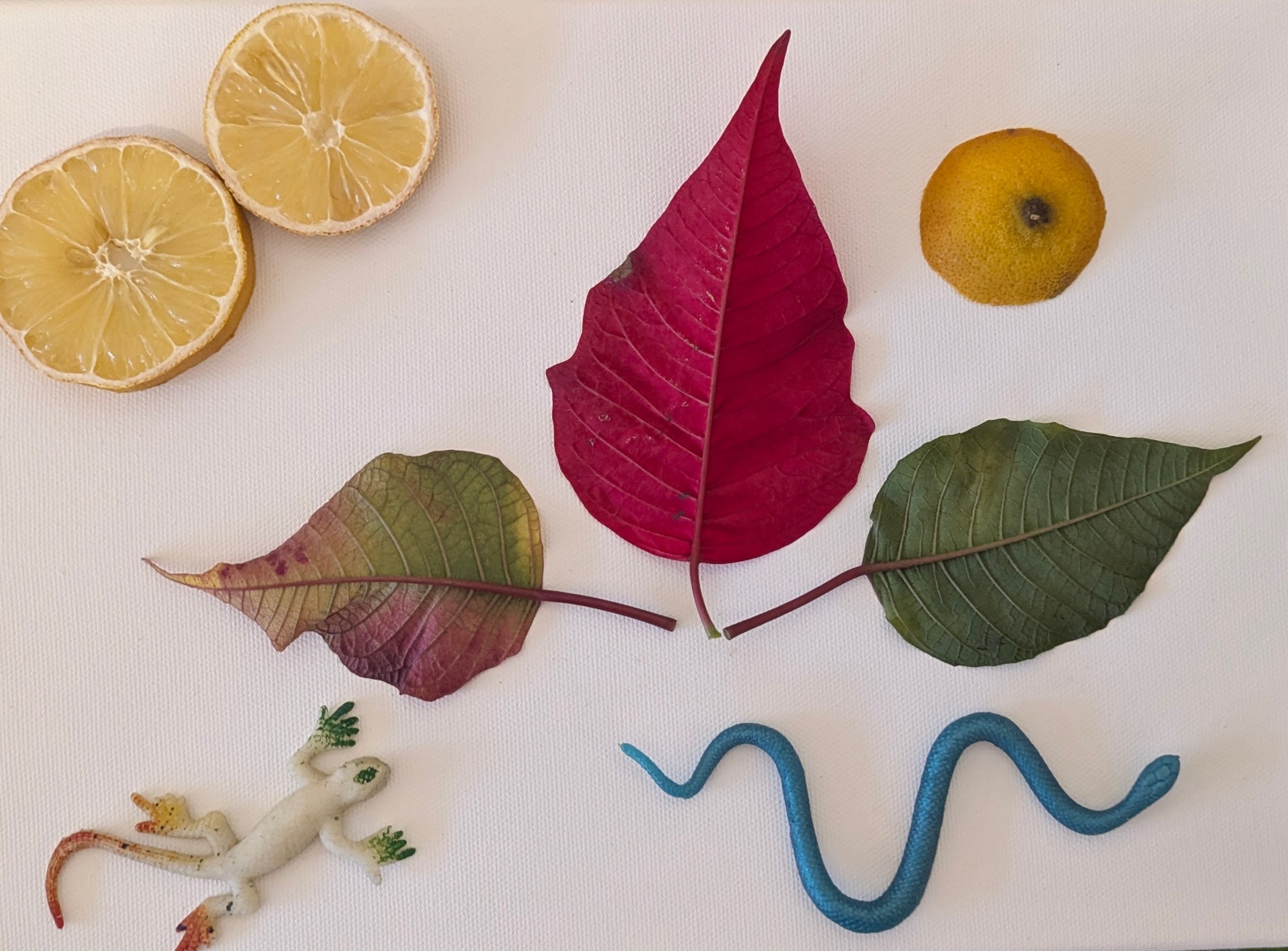
I bought three brand-new spray bottles and some cheesecloth for the piece. I had this slightly unhinged idea for an abstract, off-world scene using slices of lemon — maybe a sun, a moon, or some distant planet — so I cut two round slices that felt promising. Since it’s winter and everything outside is either dead or buried under snow, I was lucky enough to pluck three leaves from my poinsettia houseplant.
Then I escalated.
I asked my son if I could borrow a couple of his squishy animals to add some unexpected character to the scene. He graciously lent me his gecko and snake. I also pulled out some bubble wrap, planning to use it along the bottom third of the canvas for texture, while the cloth would create a more uniform surface above. I was very excited.
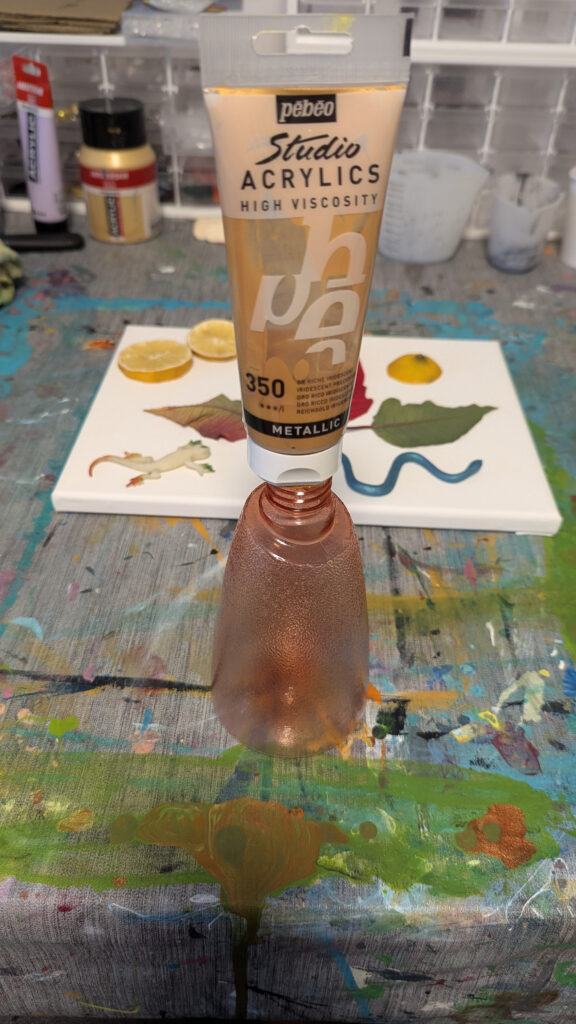
After prepping all my props, I mixed my golden paint with water and poured it into the spray bottle. I was ready.
Spray.
Nothing.
Spray again.
Still nothing.
Repeat several more times, now accompanied by swear words, aggressive tube jiggling, and frantic nozzle adjustments. Nothing. Eventually, I poured the paint into a cup and tried spraying from there so I could keep the tube fully submerged.
Success!
…Except I was so focused on getting the spray to work that I wasn’t paying attention to where I was spraying.
Yay. Paint all over my back wall.
“It’s washable,” I told myself. “I don’t want to lose momentum.”
So I moved on and sprayed the canvas. It was not the smooth, effortless process Nate made it look like. I blame the spray bottle. But eventually, the paint went on, and I walked away, hoping for the best.
Day 2
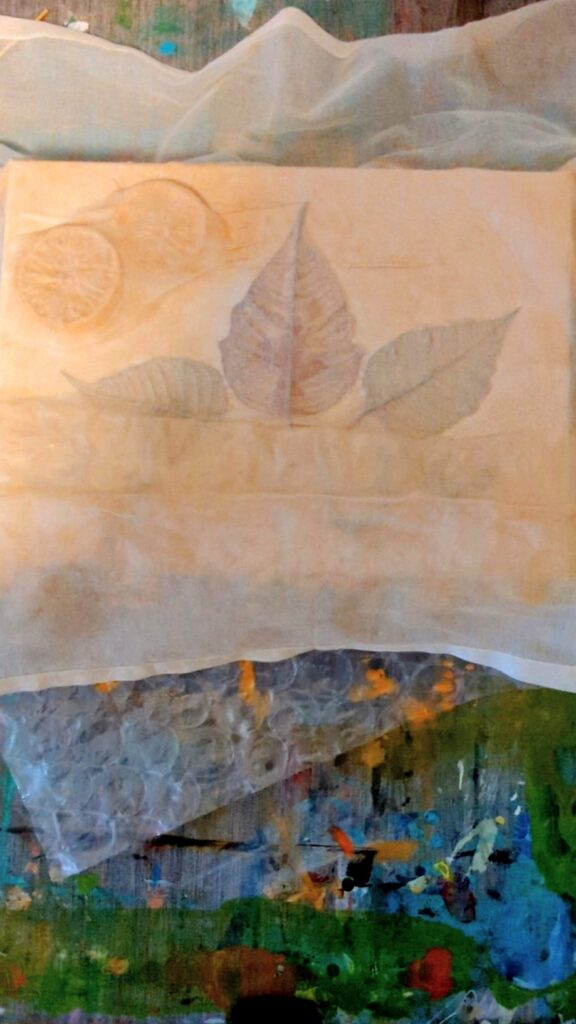
The next morning, I slowly peeled back the cloth. The result was… not terrible. The areas where the cloth made solid contact with the canvas had a really interesting texture. The leaves seemed to be adhering nicely, though I won’t know for sure until day four.
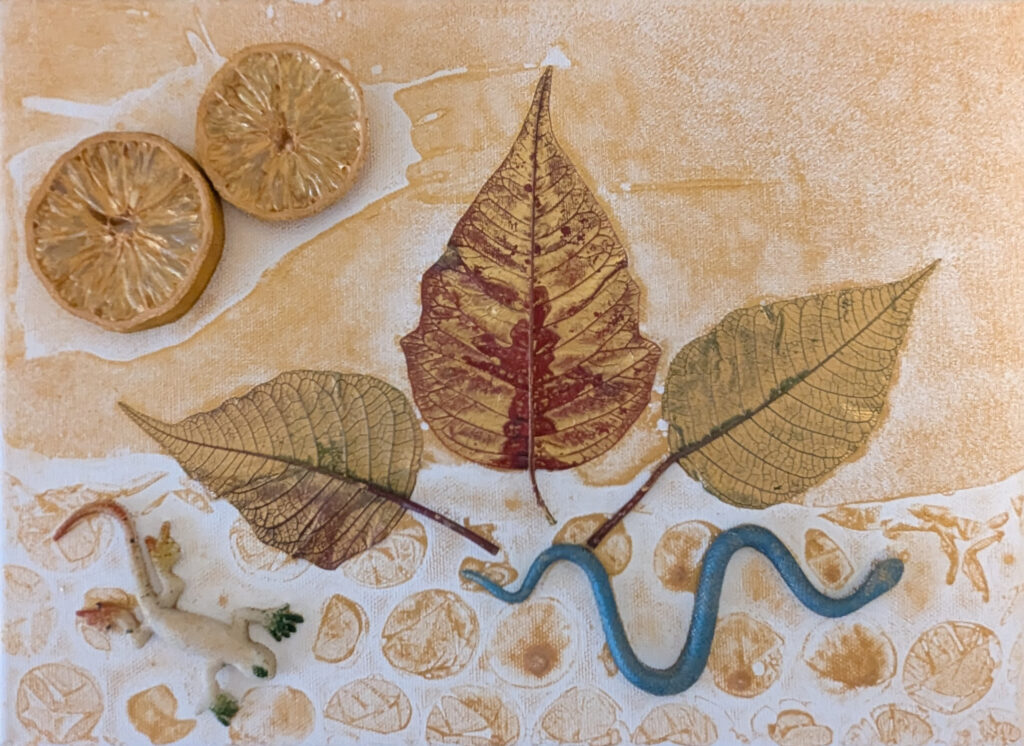
I immediately noticed a few issues. I’d sliced the lemons too thick, which meant the cloth didn’t fully reach the canvas around their edges, leaving some odd shapes behind. The large bubble wrap created an interesting texture, but I started to think smaller bubbles might work better.
So for the second layer, I made a few changes:
- A light teal-blue paint
- Smaller bubble wrap
- Extra care to get the cloth as close as possible to the lemon edges
Once again, the second brand-new spray bottle betrayed me. I was incredibly frustrated — the whole point of this process was to spray a thin layer of paint, and the one tool designed for that job was refusing to cooperate.
And then something clicked.
It’s not about the spray bottle.
It’s about getting a thin layer of paint onto the canvas.
So I ditched the bottle, poured the paint onto a giant sponge, and gave my canvas a sponge bath instead. I have absolutely no idea how it will turn out.
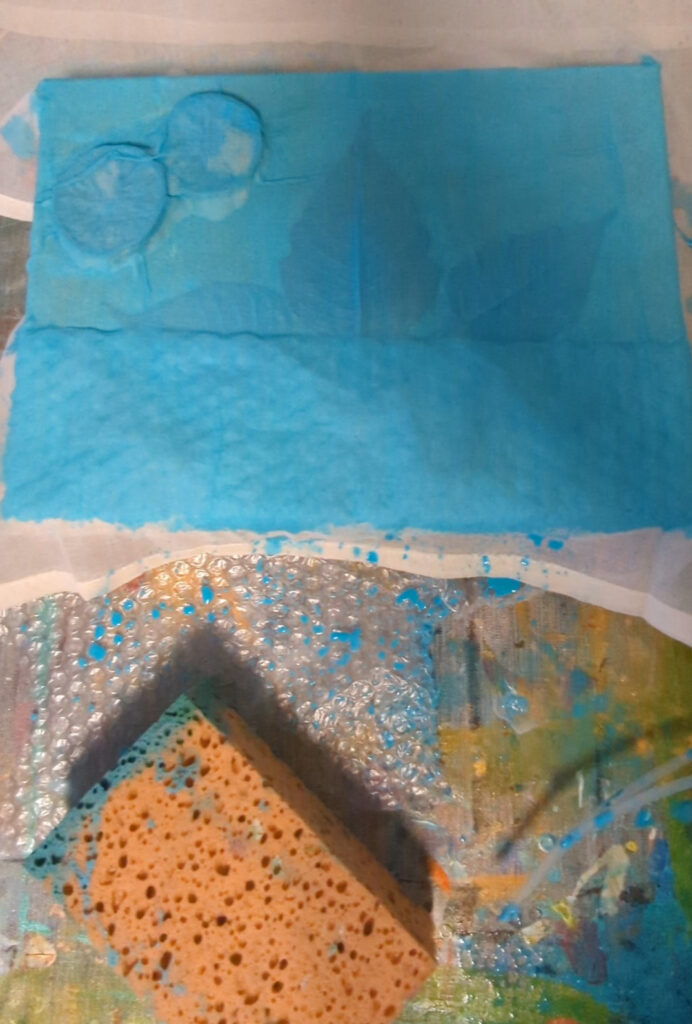
That’s a problem for tomorrow.