As an artist, the main objective is to create. But the moment you decide to turn art into a business, creation becomes only one part of the work. Suddenly, you’re also documenting, curating, editing, publishing, marketing, learning new software, navigating legal language, making UX decisions, managing logistics, and building a brand — often all at once.
Much of this labor is invisible. It happens quietly, behind screens, inside decision-making processes, and across steep learning curves. It’s not just technical work; it’s emotional and cognitive labor too. Trying to hold all of this within the same creative window isn’t a failure of organization — it’s cognitive overload.
Over time, I’ve had to learn how not to burn out. That learning hasn’t come from productivity hacks as much as from reflection: asking myself better questions, making decisions that align with my values, breaking work into phases, and writing things out before acting on them. This is a skill set I’m still actively developing.
Right now, content creation often feels like a parallel job. It’s draining and time-consuming, and sometimes it leaves me feeling so depleted that I don’t even want to make art — because art now comes bundled with the pressure to document, package, and share it in order to grow a business. At some point, I started asking myself a different question: What if content creation became a byproduct of reflection instead of another obligation?
That question forced me to examine why I want to create content at all — not because the internet says I should, but because it needs to align with something deeper. That reflection led me back to the way I make art in the first place.
When I paint, I often begin with a vision, a hope, or an idea I want to capture. But the struggle of getting it onto the canvas is real. The process frequently takes a form I didn’t intend. I can fight that, or I can lean into it — accept it, trust it, and remain open to something different that might be equally good, or even better. Over time, I’ve learned to loosen my grip on control and trust the process, trust myself, and trust that something meaningful can emerge if I stay present and receptive.
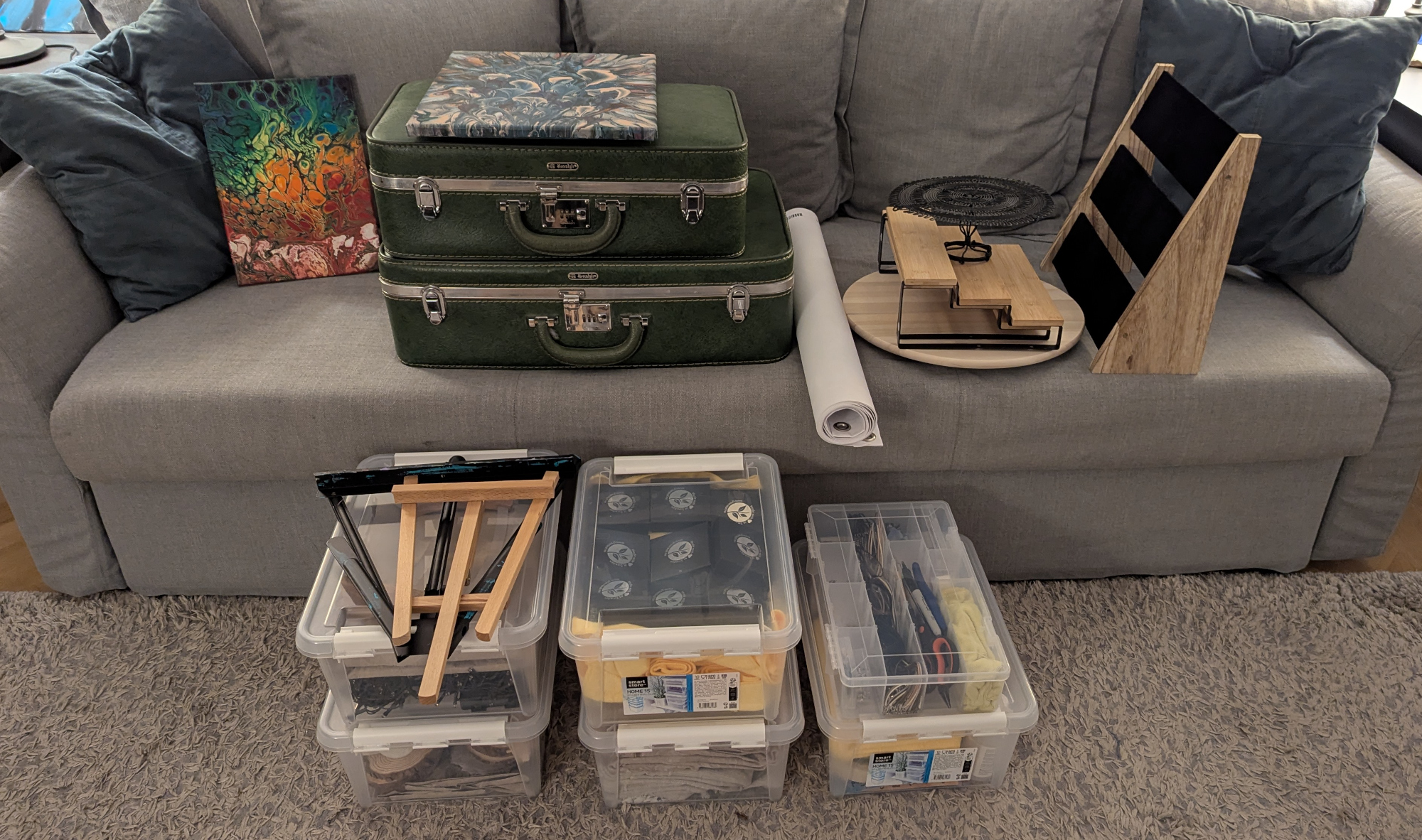
In fact, my jewelry work emerged this way. It wasn’t something I set out to do strategically. It grew out of the leftover paint from my paintings — material that felt too alive, too full of possibility to throw away. Experimenting with it became a way to stay curious, to let the process continue instead of forcing an outcome. What began as exploration slowly became another form of creating, and eventually, another path within my creative work.
That word — trust — has become one of my personal mantras.
Another mantra I return to is humor. I am constantly learning, and that means I make a lot of mistakes. When things go wrong, I try not to take myself so seriously that I can’t laugh. Once, while spinning a canvas covered in wet paint, the entire thing flew off and paint went everywhere. It was frustrating and messy — but it was also absurdly funny. Moments like that remind me that mistakes, bloopers, and surprises are part of the process. I take my work seriously, but I don’t want to lose the ability to laugh when things inevitably go awry.
The third word I come back to again and again is begin.
I care deeply about encouraging others — and myself — to step outside of their comfort zones and try things they’ve long dreamed of doing. This path has been difficult for me. I constantly second-guess my skills, my decisions, and my potential. Discouragement comes easily. But quitting rarely does. There is something in me that believes I should pursue art not just as a hobby, but as a vocation. I’ve heard all the warnings about how hard it is to make a living as an artist — and maybe only a few truly do — but I know one thing for certain: I definitely won’t make it if I never try.
So I encourage myself to begin, again and again.
When I step back, I see how these ideas form a kind of loop. We encourage ourselves to start. We trust the process as we move forward. We laugh at our mistakes. And then we begin again — a little wiser each time. This cycle repeats, quietly shaping both the work and the person doing it.
That, more than anything, is the invisible labor behind the art.