Day 3
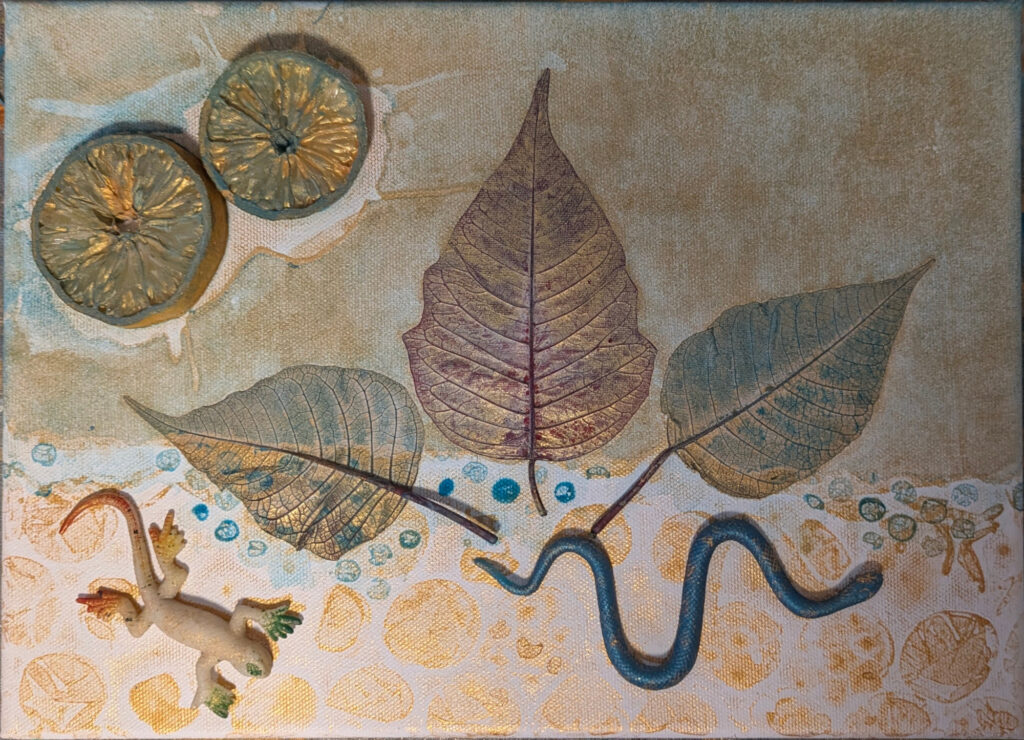
My experiment with thinned acrylic paint, leaves, lemons, mini animal figures, cheesecloth, and bubble wrap continued. After the second layer of teal blue dried, I removed the cloth to see what had been left behind.
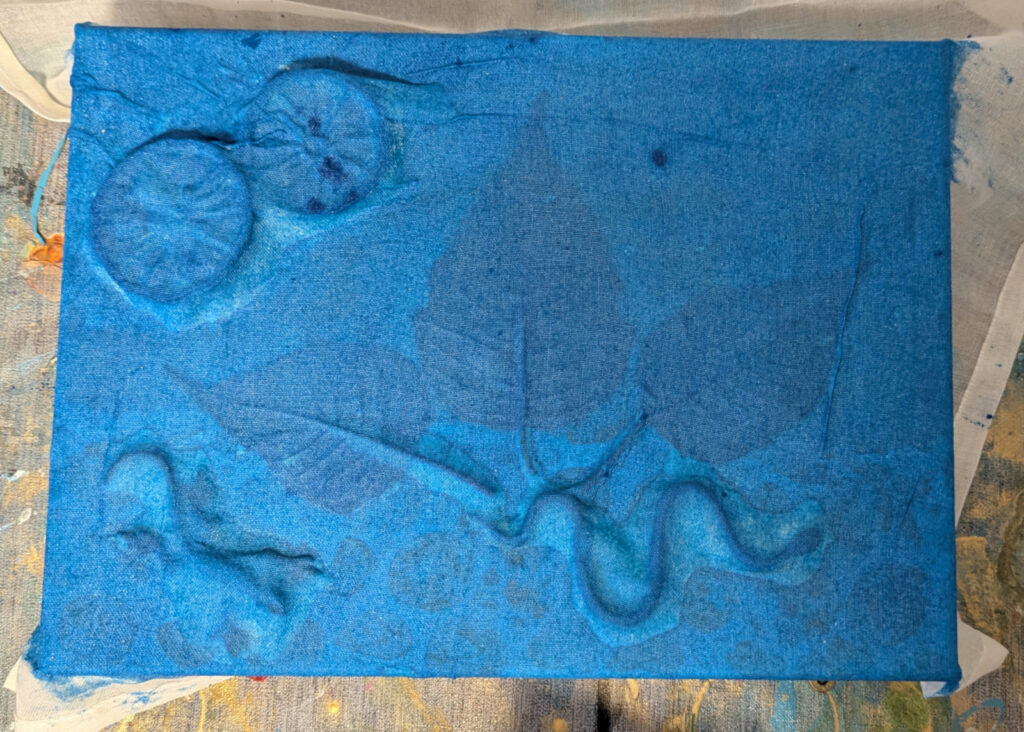
Very little of the light blue made it beneath the smaller bubble wrap, leaving only a few scattered speckles. The spacing of the cloth around the lemons was still a bit too wide and didn’t sit as close to the edges as I had hoped. The leaves, however, seemed to be absorbing the paint beautifully, though I wouldn’t know what the canvas beneath them would reveal until the final day. I hoped for a subtle but interesting pattern and color.
At this point, I decided the spray bottle had officially lost its privileges. For the final layer, I applied the darker blue paint with a sponge and skipped spraying altogether.
Day 4
The day of reckoning had arrived.
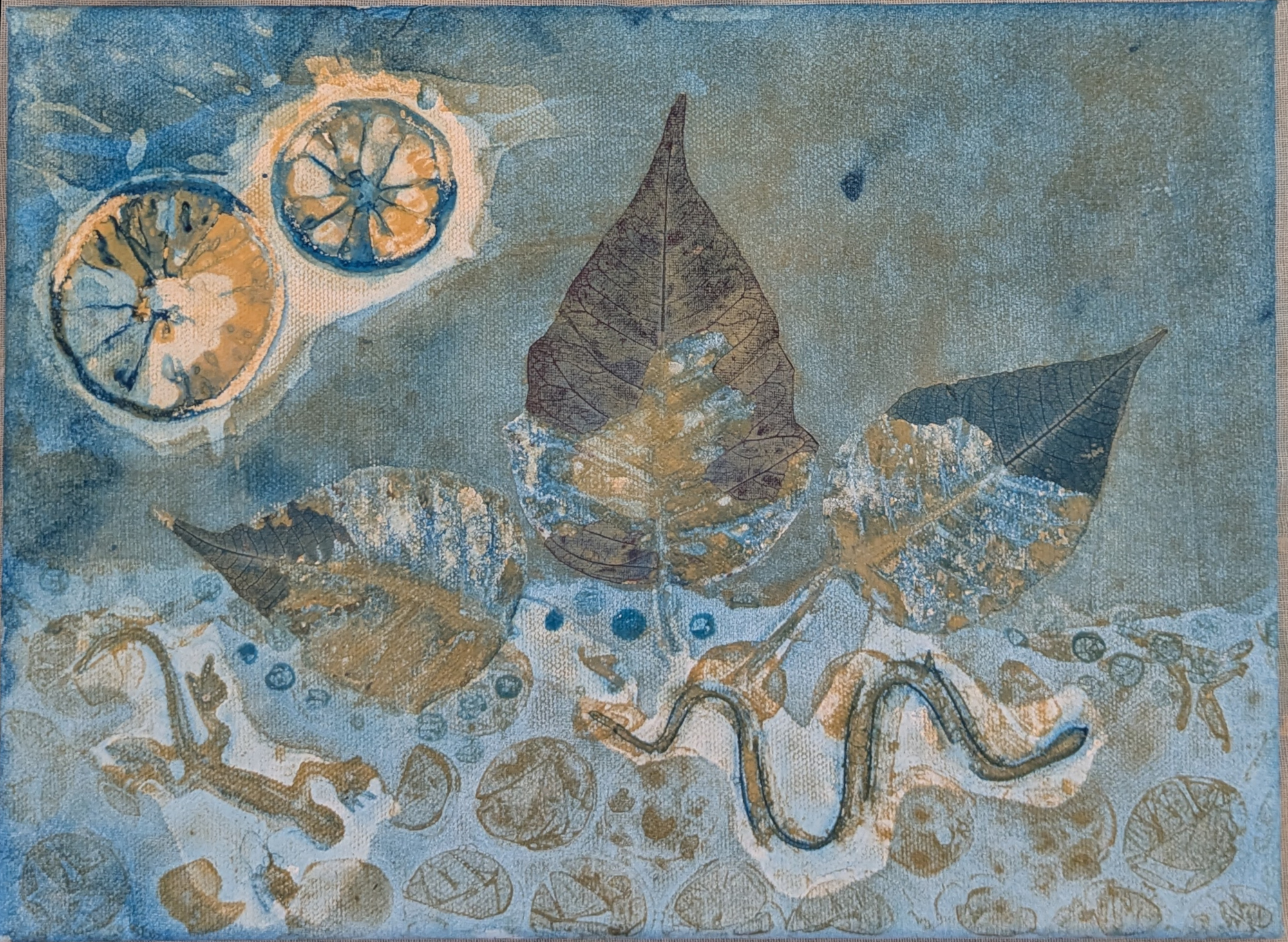
With the final layer dry, I removed the cloth and reflected on what worked, what didn’t, and what I might carry forward into future experiments.
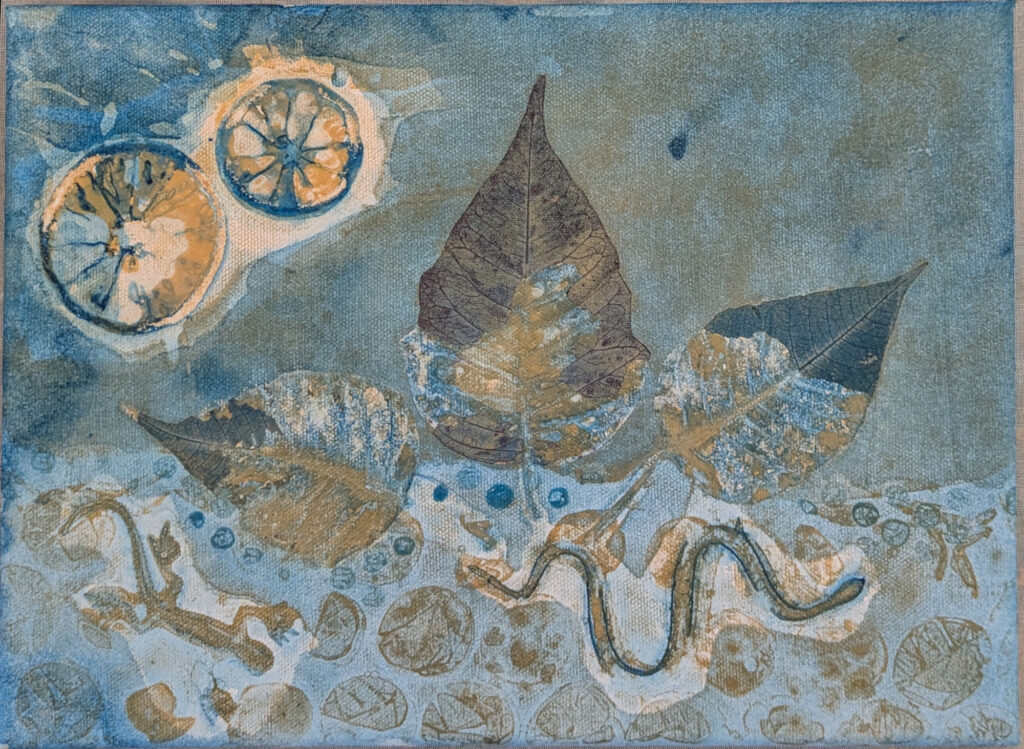
Here are a few takeaways:
- Cheesecloth:
When the cheesecloth made direct contact with the canvas, it created a beautifully layered, multi-dimensional effect. This was one of my favorite results and is something I will absolutely use again. - Bubble wrap:
The large bubble wrap left an interesting pattern, but the smaller bubbles didn’t receive enough paint to create the texture I was hoping for. Next time, I would apply paint directly to the bubble wrap before placing it on the canvas. There’s definite potential here, especially when experimenting with different bubble sizes. - Objects with depth (lemons, gecko, and snake):
These proved challenging for this technique. The space between the object and the cloth made it difficult for the paint to settle in the way I intended. That said, they still left some compelling marks—especially the lemons. I would absolutely consider using them again, but with a different method of paint application. A functioning spray bottle, for example, would have helped. - Leaves:
The leaves were what I was most excited about, and they also brought the biggest surprise. Some portions of the leaves stuck to the canvas instead of peeling away cleanly. At first, this felt like a problem—but the more I looked at it, the more I appreciated the rustic, organic quality they added. The embedded leaf fragments gave the piece a natural texture that I didn’t plan for, but ended up liking.
Conclusion
Overall, this was a fun and worthwhile experiment, and I am grateful for the inspiration from Nate Bright to give it a try. It gave me valuable insight into how different materials interact with the canvas when layered with thinned paint over time.
The cheesecloth was a standout and will likely become a recurring element in future work. The bubble wrap sparked ideas for an underwater-themed piece, and the lemons—while tricky—offered beautiful forms that I’d like to explore again with thinner slices and a better paint application method.
As with most experiments, the process taught me more than the outcome alone ever could. And that, to me, made the whole thing worth it.