
When Patience Becomes Part of the Painting
 Some paintings are finished with a brush, while others are finished by simply giving them time.
2 August 2026
There comes a point in some paintings where the hardest thing isn’t knowing what to add.
It’s knowing what to take away.
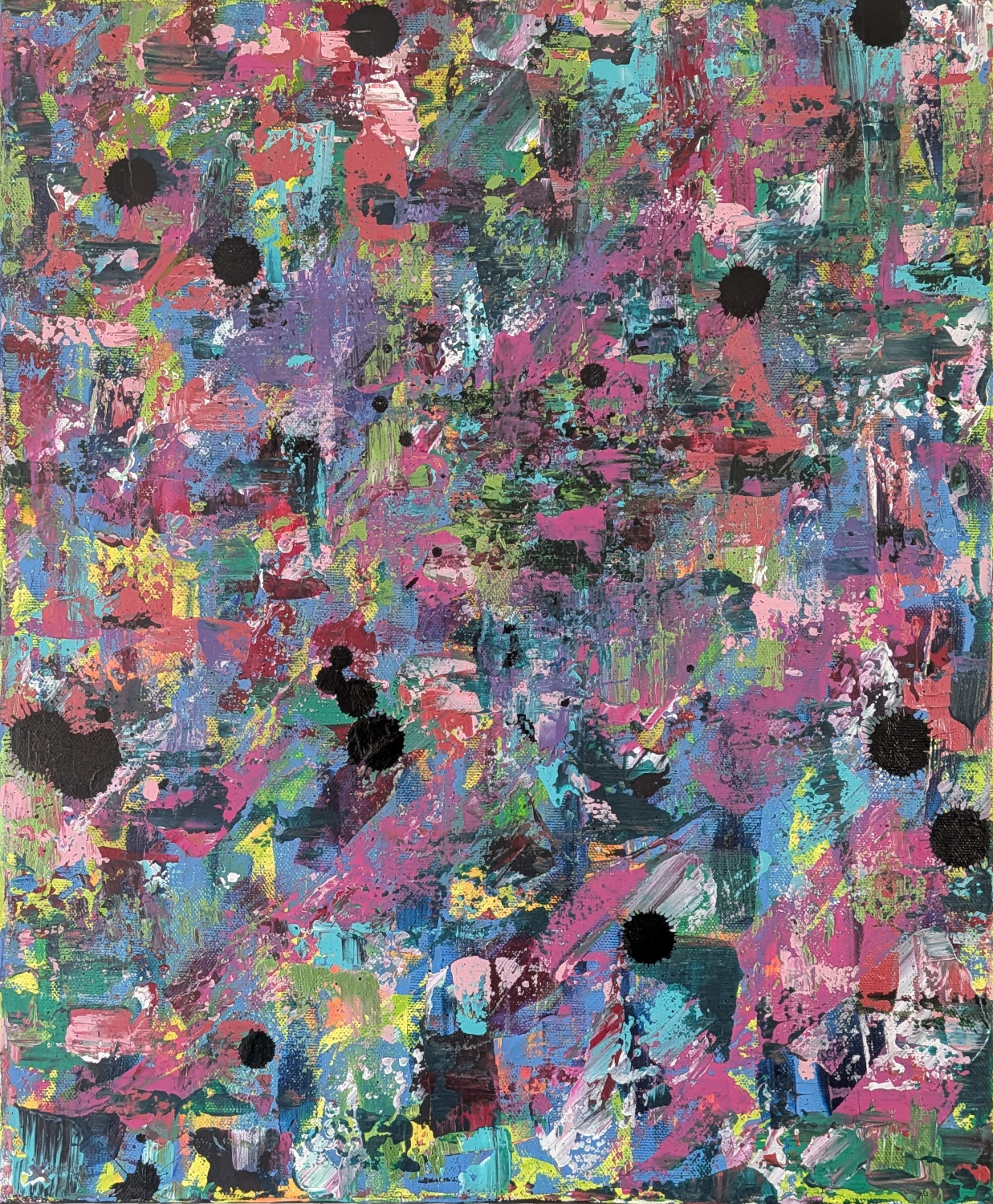
Urban Wall has been one of those paintings.
It has changed more times than I can count. Every layer seemed to ask a different question. What if I scraped more? What if I added another color? What if it needed a bold gesture? What if I dropped ink from a height?
That last experiment became a turning point.
The black ink splatters were exciting while they were happening, and I learned a lot from the process. In fact, that experiment eventually inspired another painting entirely. But as I lived with Urban Wall, I realized something wasn’t quite right.
The center of the painting no longer felt like itself.
The black marks had become the first thing I noticed, instead of the color, movement, and layers that had been there all along.
So rather than adding something new, I did something I rarely do.
I started taking things away.
One by one, I painted over several of the black splatters until the painting began to breathe again. The remaining marks became part of the story rather than the whole story.
It reminded me that finishing a painting isn’t always about creating more.
Sometimes it’s about recognizing which ideas belong on a different canvas.
Urban Wall taught me that lesson.
The black splatter experiment wasn’t a mistake. Without it, I might never have created Expanse, a painting that grew entirely from that curiosity. Urban Wall simply wasn’t the place where that idea belonged.
I now feel like this painting is finished. I had to live with it for several weeks before making the final changes, but now it feels balanced. Both the painting and I can finally breathe again.
In the end, it wasn’t the bold experiments that finished this painting. It was patience.
Urban Wall 41 × 33 cm