
Licorice Ocean
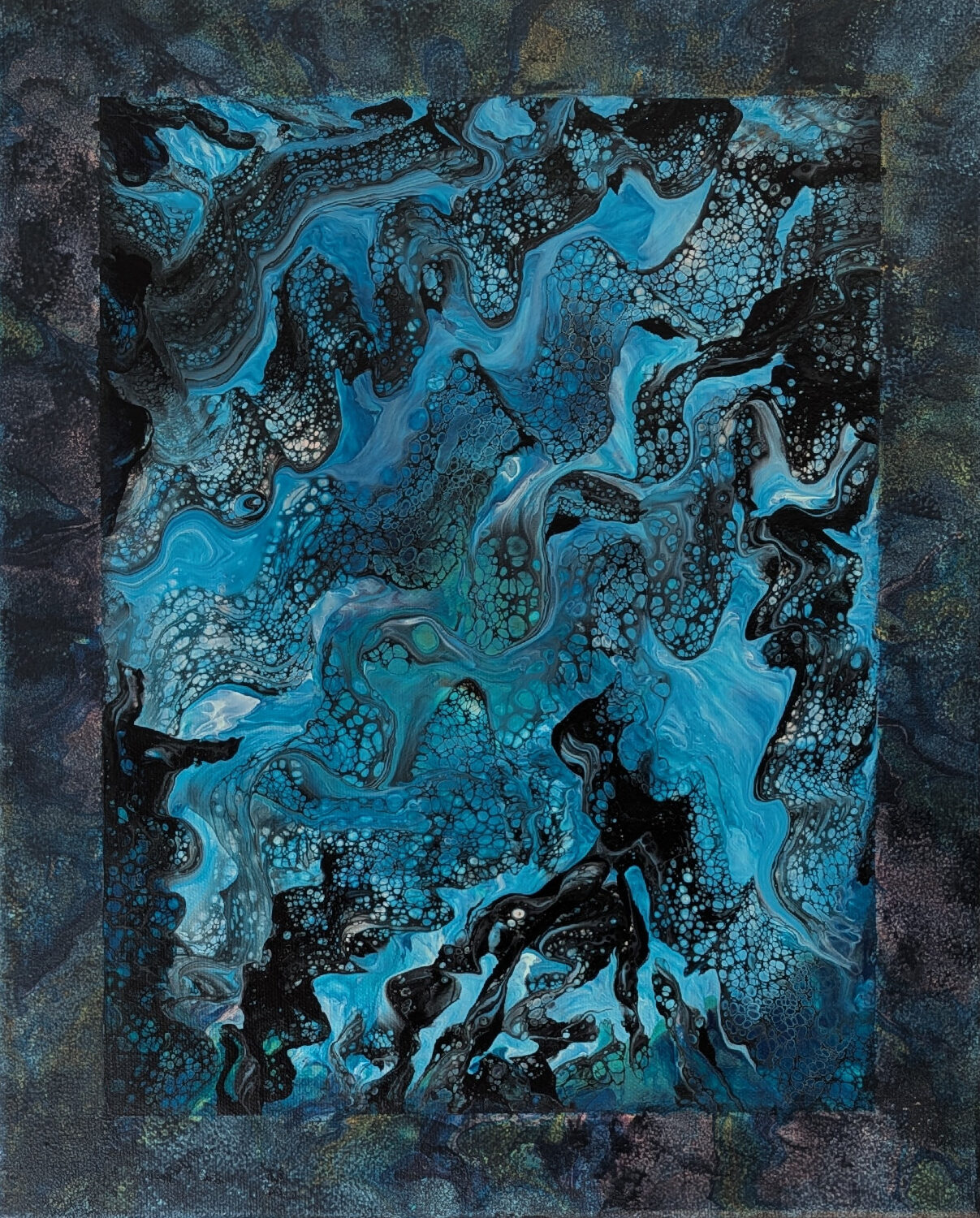
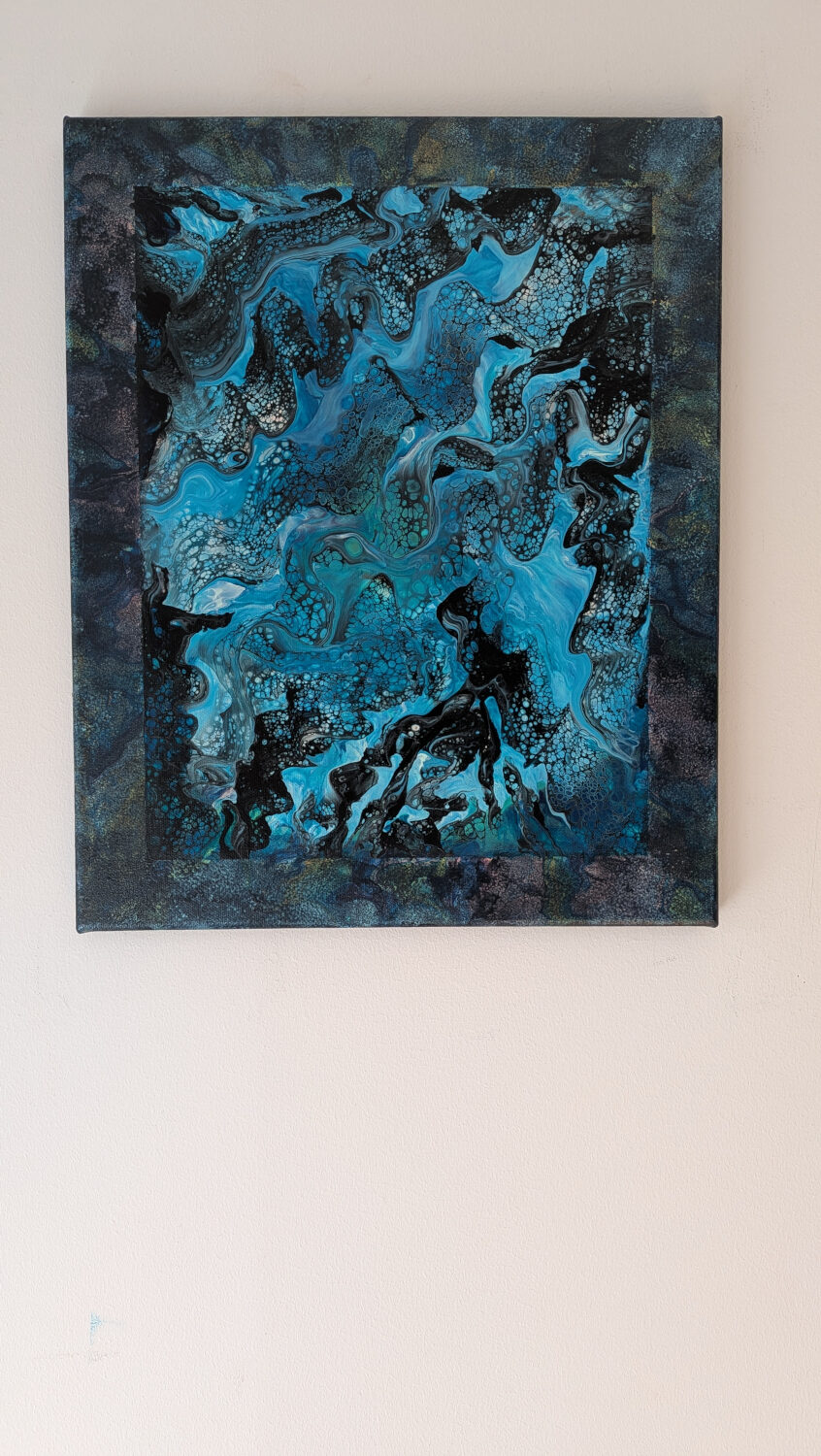
My father always said, “If at first you don’t succeed, try, try again.” Licorice Ocean may be the painting that took his advice most literally.
27 September 2026
This piece began as a soft fluid painting filled with pink, turquoise, blue and green. I liked it, but also felt it had the potential to become something even cooler.
I imagined a woman in a beautiful flowing red dress, almost dancing across the existing background. I had never painted a person before, so it seemed like the perfect canvas to take a risk on. Spoiler alert: this didn’t work out.
I outlined where the woman would go, masked large portions of the canvas and created the dress using fluid paint in warm oranges, reds and earthy colors, blown out with a hair dryer.
The dress was flowy and a bit whimsical, but not quite what I had imagined, and I could never get the woman’s figure the way I wanted.
For months, the painting sat unfinished while I experimented with other ways of bringing the woman into the piece, including some unsuccessful attempts at image transfer with my Gelli plate. Eventually, I realized I was far more interested in experimenting with the painting itself than in rescuing my original idea.
So I covered her up.
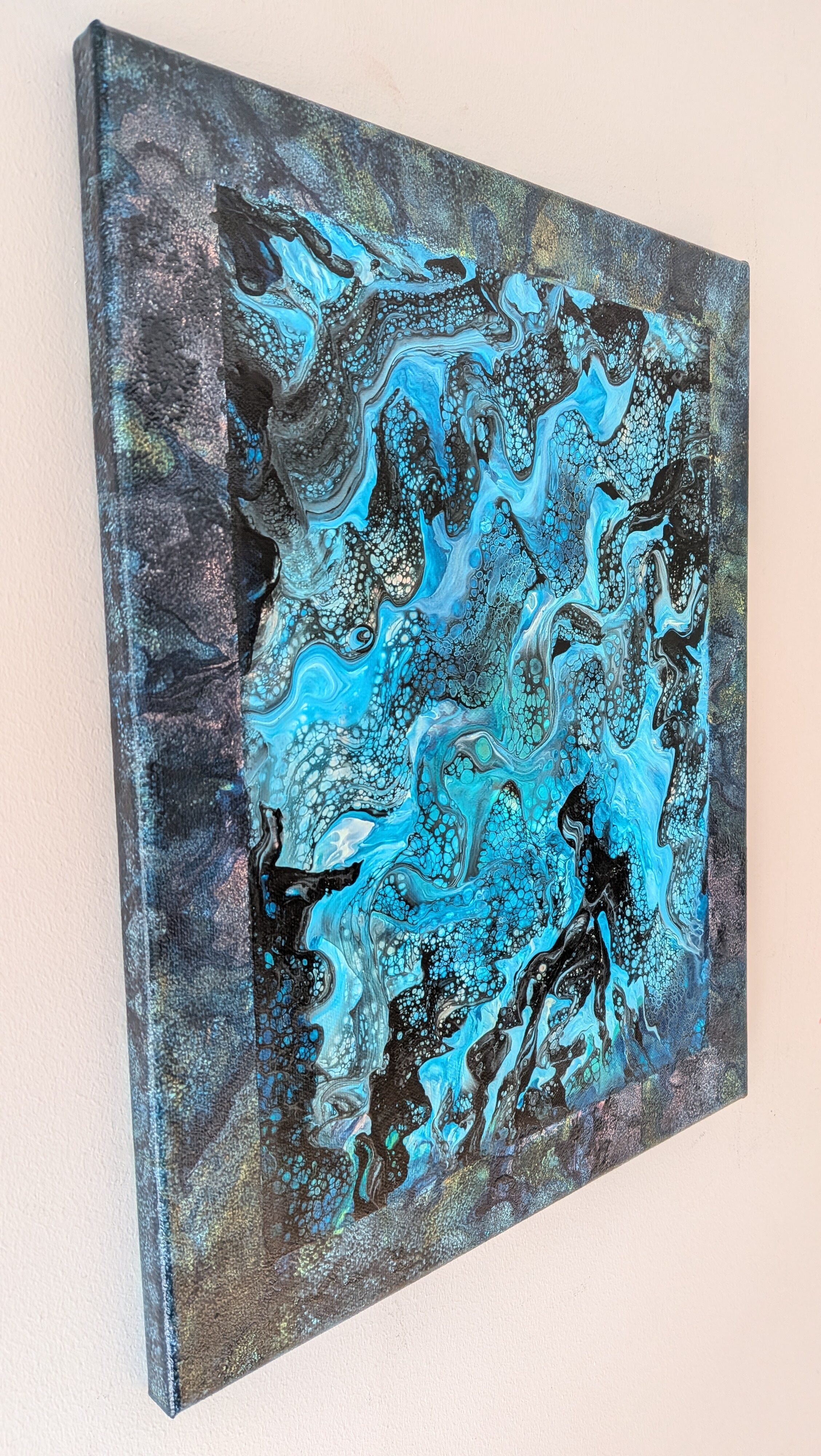
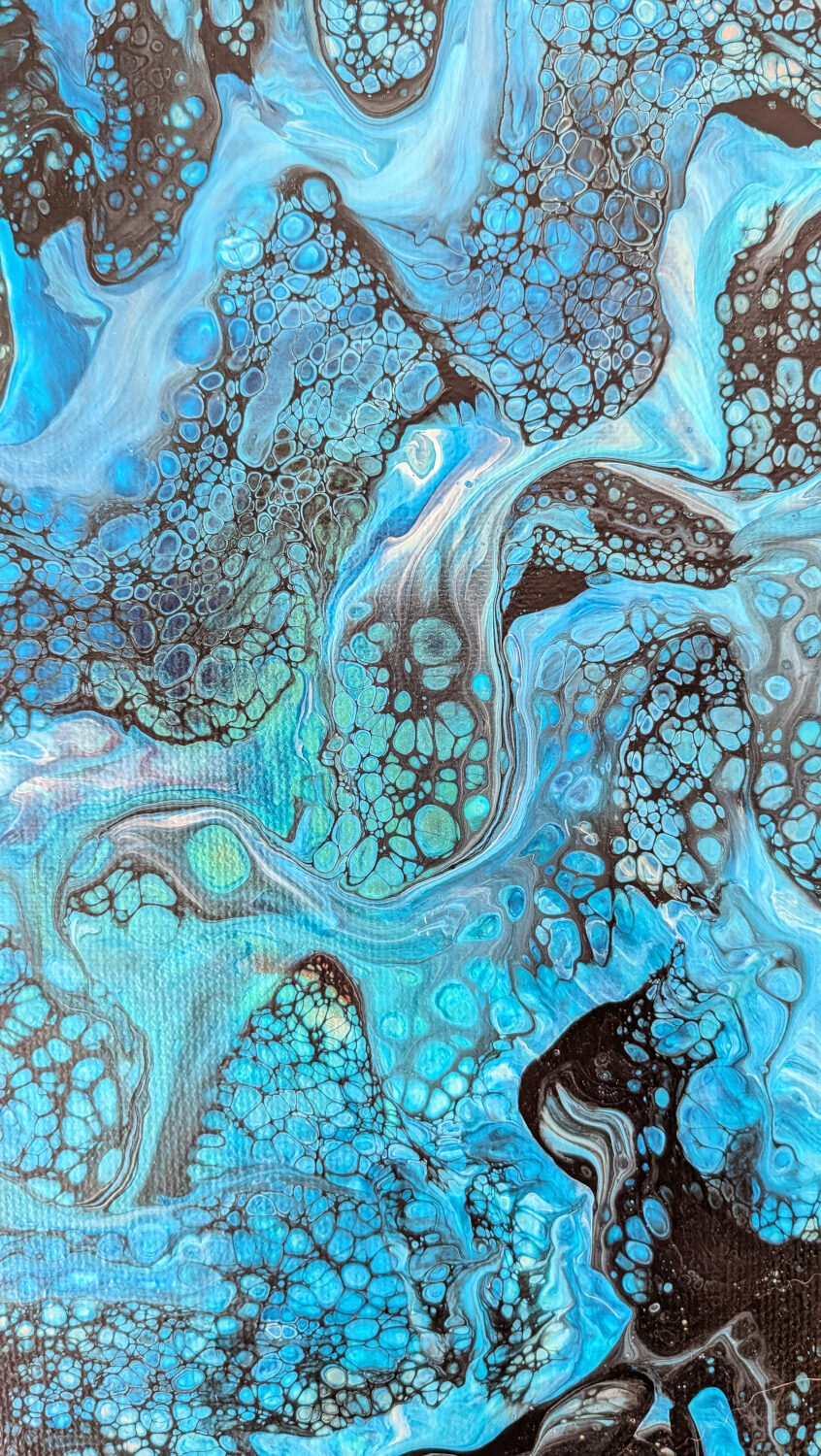
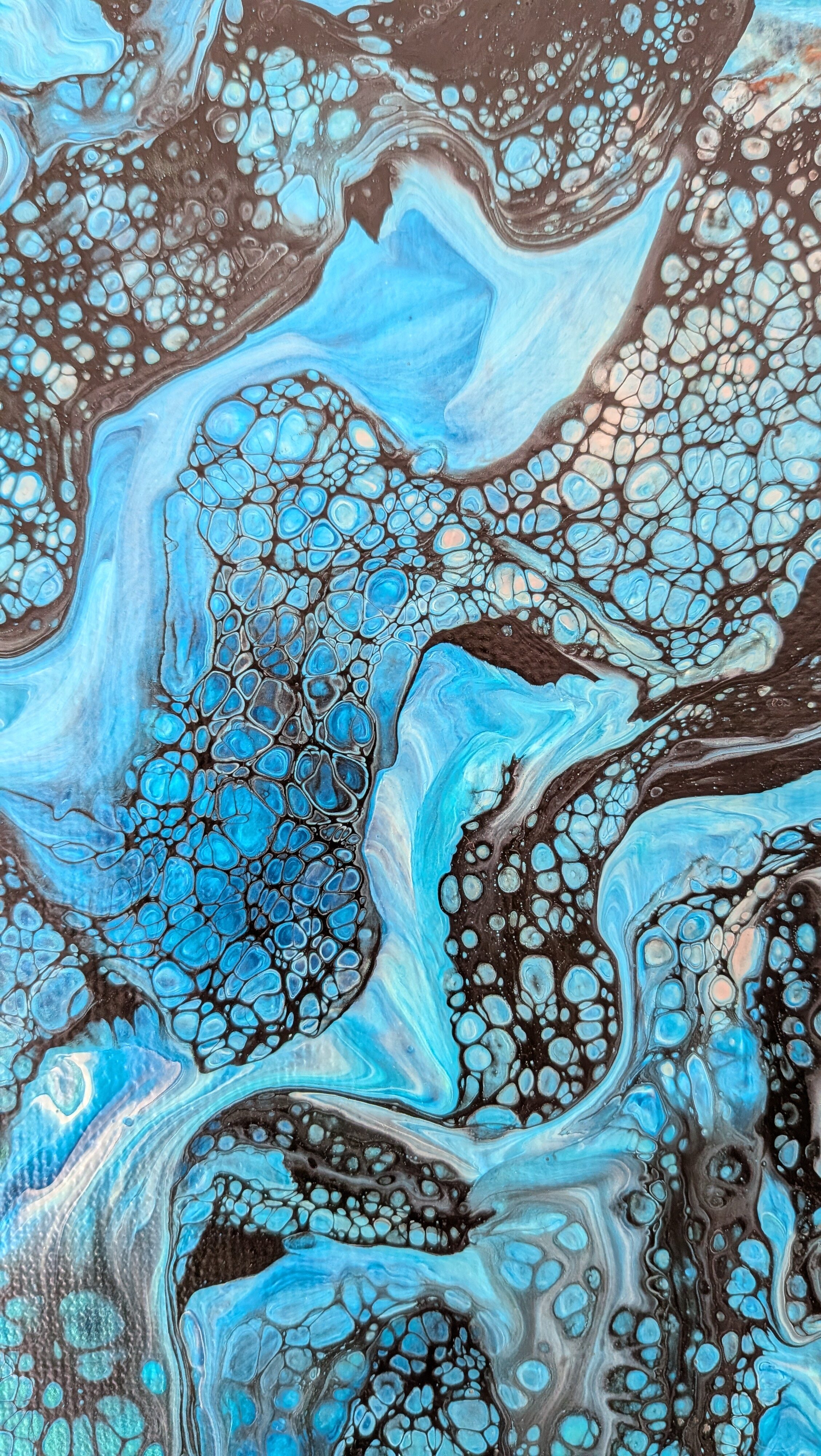
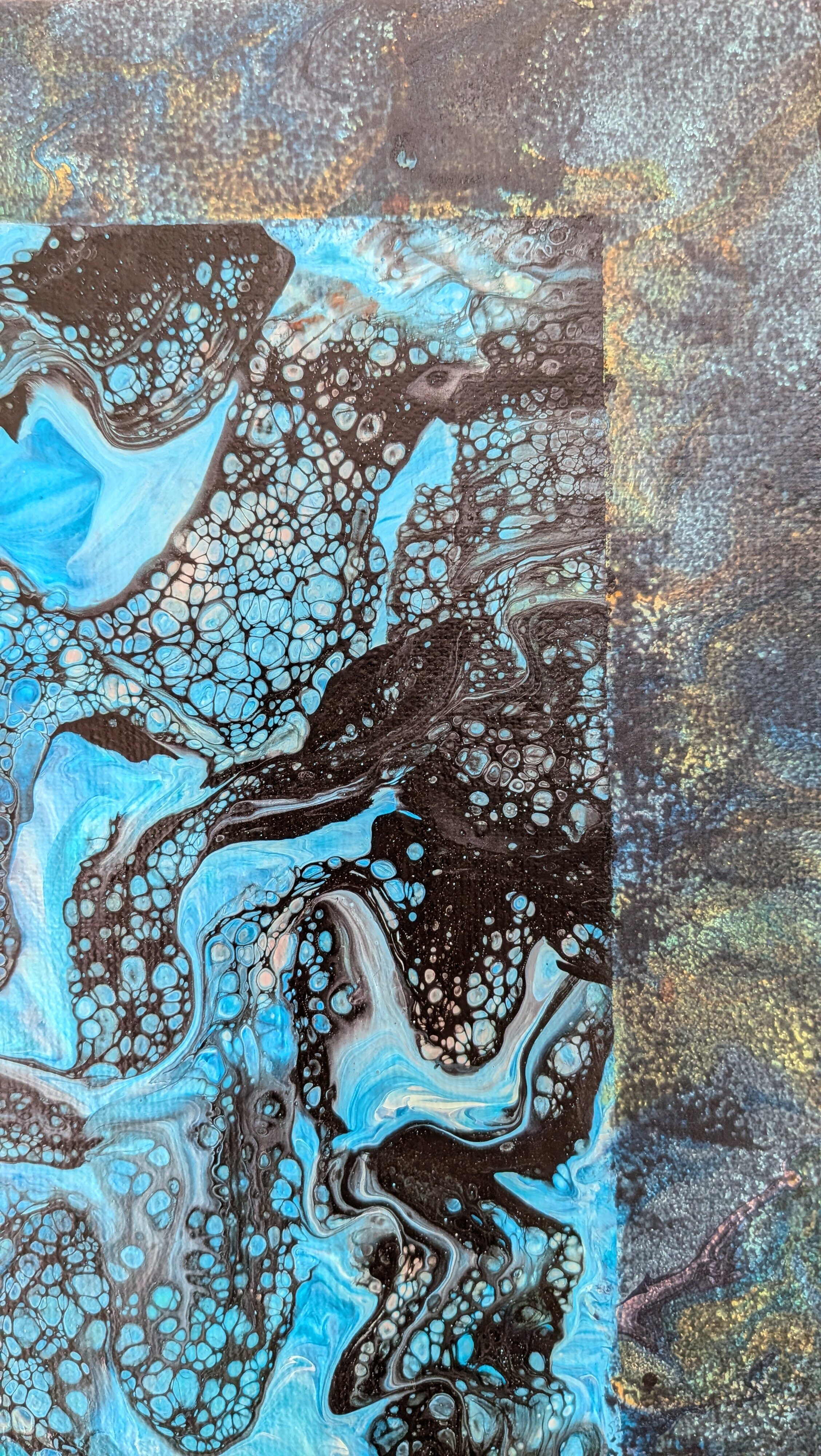
I once again masked off a large rectangle in the center and poured again, this time using turquoise, metallic blue and pearl white. I used black paint on the back of my palette knife to create a ribbon effect. The result was dramatically different from the original painting: dense networks of cells, dark twisting forms and bright currents of blue.
And underneath it all, completely hidden, is still a woman in a fiery red dress. I liked this new direction much more.
The new center initially looked almost like a separate painting sitting on top of the old one, so I decided not to hide that history completely. Instead, I glazed the surrounding original pour with Payne’s Grey, transparent blue and subtle metallic and pearl blue colors. Applied with a sponge, the glaze darkened the old painting while still allowing fragments of its pinks, greens and blues to remain visible beneath the surface. It also created a wonderfully murky, underwater effect around the brighter center.
What began as one painting became another, and finally became something much stronger.
When it was finished, my son looked at the twisting black forms swimming through all that blue and gave it its name:
Licorice Ocean.
And that felt exactly right.
Licorice Ocean 41 × 33 cm